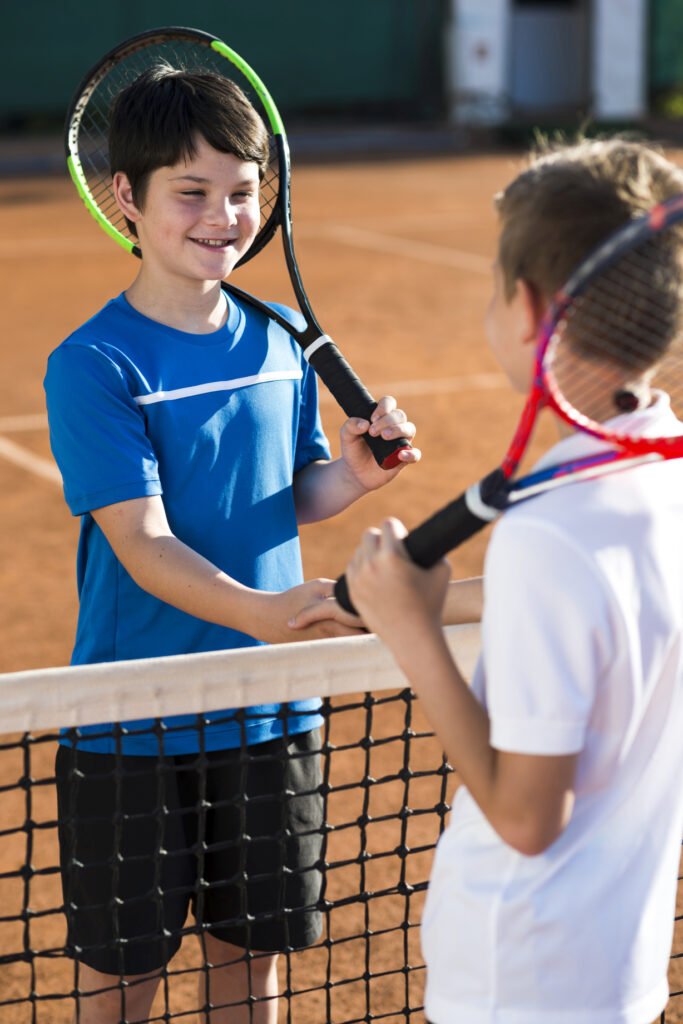
Expanded Summary of Tennis Development for Children Aged 3-9 Years
Tennis is a fantastic and engaging sport for children, providing numerous benefits that extend beyond physical fitness. By introducing tennis early, children can develop better coordination, build social skills, and enhance their overall well-being.
Ages 3-5: A Foundation of Fun
During this crucial stage, the focus should be on making tennis enjoyable. At ages 3 to 5, the primary goal is to instill a love for the game through playful activities.
- Engagement through Play: Use fun games and exercises that revolve around basic movements. Activities should include opportunities for children to run, jump, and balance, which are fundamental to building their motor skills.
- Basic Skill Introduction: Children can begin to learn how to hold a racquet properly and practice tossing a ball. Simple target games can be introduced where the objective is to hit a ball towards a designated area, establishing early hand-eye coordination.
Ages 6-7: Building Skills and Understanding
As children progress into the 6-7 age range, it’s important to start developing their tennis skills further.
- Rallying Skills: Introduce the concept of short rallies, where children can practice hitting the ball back and forth with peers. This not only helps them work on their striking skills but also fosters a sense of teamwork and cooperation.
- Understanding the Game: Teach the basic rules of tennis, including how to keep score and the concept of games and sets. This helps children grasp the structure of the sport while keeping it light-hearted and engaging.
- Social Interaction: Encourage friendly matches that promote social interaction, teamwork, and sportsmanship. This will help them navigate social dynamics and learn to communicate effectively on the court.
Ages 8-9: Refinement and Competitive Play
By ages 8 to 9, children are ready to refine their tennis techniques and experience more structured play.
- Stroke Development: Focus on teaching proper techniques for essential strokes, including forehands, backhands, volleys, and serves. This is crucial for building a solid foundation for their future in tennis.
- Introduction to Competition: Create opportunities for them to participate in friendly tournaments and matches. This introduces a competitive element that can motivate them while ensuring it remains a fun and supportive environment.
- Fitness and Conditioning: Incorporate fitness exercises that aim to improve their overall agility, strength, and endurance. This not only benefits their tennis performance but also promotes a healthy lifestyle.
Conclusion
Engaging children in tennis from a young age lays the groundwork for a lifelong appreciation of the sport. By focusing on fun and skill development while gradually introducing competitiveness, children can enjoy the many benefits tennis has to offer, including physical fitness, mental discipline, and the ability to work well with others. Ultimately, the early years in tennis can foster not only adept players but also individuals who value teamwork and resilience.